Foundations · 6 min read
Peptides: a short primer
Amino acids, peptide bonds, sequence and synthesis. The vocabulary behind every entry in the catalog, explained from first principles.
A peptide is a short chain of amino acids joined by peptide bonds. There is no sharp cut-off between a peptide and a protein. By convention, chains of up to about 50 residues are called peptides, and longer, folded chains are called proteins.
Sequence is identity
The order of amino acids, read from the N-terminus to the C-terminus, defines a peptide. A single substitution produces a different molecule. Many research compounds are analogues: sequences modified from a naturally occurring peptide to change stability, receptor selectivity or half-life.
Modifications
- Cyclisation — linking two parts of the chain, as in Melanotan II, to constrain its shape.
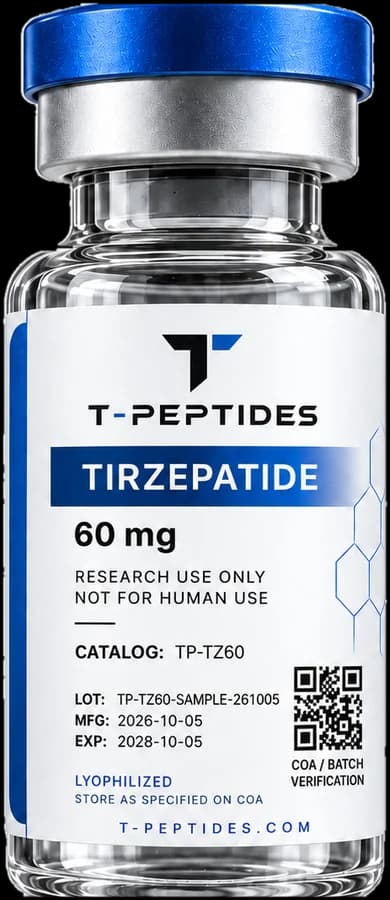
- Acylation — attaching a fatty acid chain, as in tirzepatide or cagrilintide, to promote albumin binding.
- Terminal modifications — such as N-terminal acylation or C-terminal amidation, which affect stability.
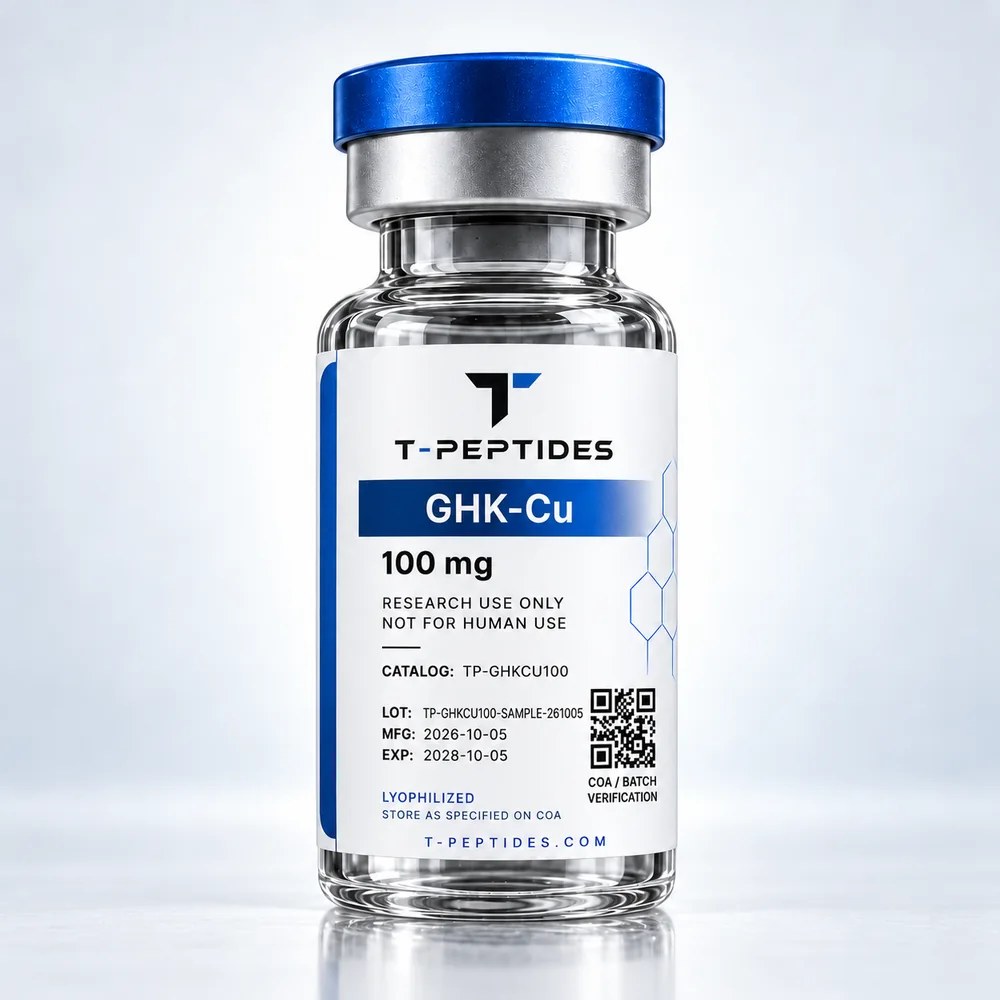
- Metal complexation — as in GHK-Cu, where the tripeptide binds a copper ion.
How research peptides are made
Most synthetic peptides are produced by solid-phase peptide synthesis (SPPS). The chain is built one residue at a time on an insoluble resin. It is then cleaved, purified (typically by preparative HPLC) and lyophilised. Longer molecules such as IGF-1 LR3 are usually produced recombinantly instead.
Educational reference only. T-PEPTIDES products are supplied for laboratory research use only and are not for human or veterinary use.